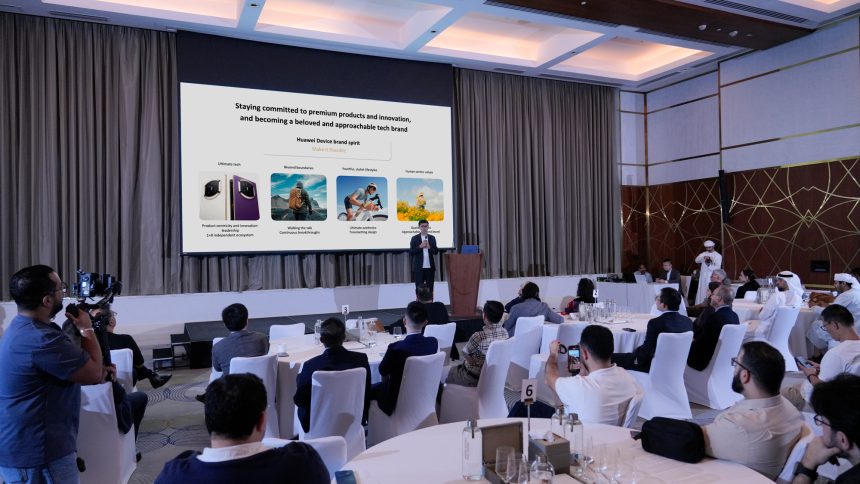
Huawei showcased its latest developments in wearable health technology, smartphones and semiconductor design at the MEA Tech Innovation Talks conference in Dubai, bringing together medical researchers, healthcare professionals and technology experts to discuss the future of digital innovation.
Held at the Grand Plaza Mövenpick alongside the ISH-ECS 2026 annual conference, the event placed particular emphasis on the HUAWEI WATCH D3, a smartwatch featuring medical-grade blood pressure monitoring capabilities. Discussions explored how wearable devices could support cardiovascular health management, hypertension monitoring and research into early diabetes risk identification.
HUAWEI WATCH D3 Highlights Advances in Blood Pressure Monitoring
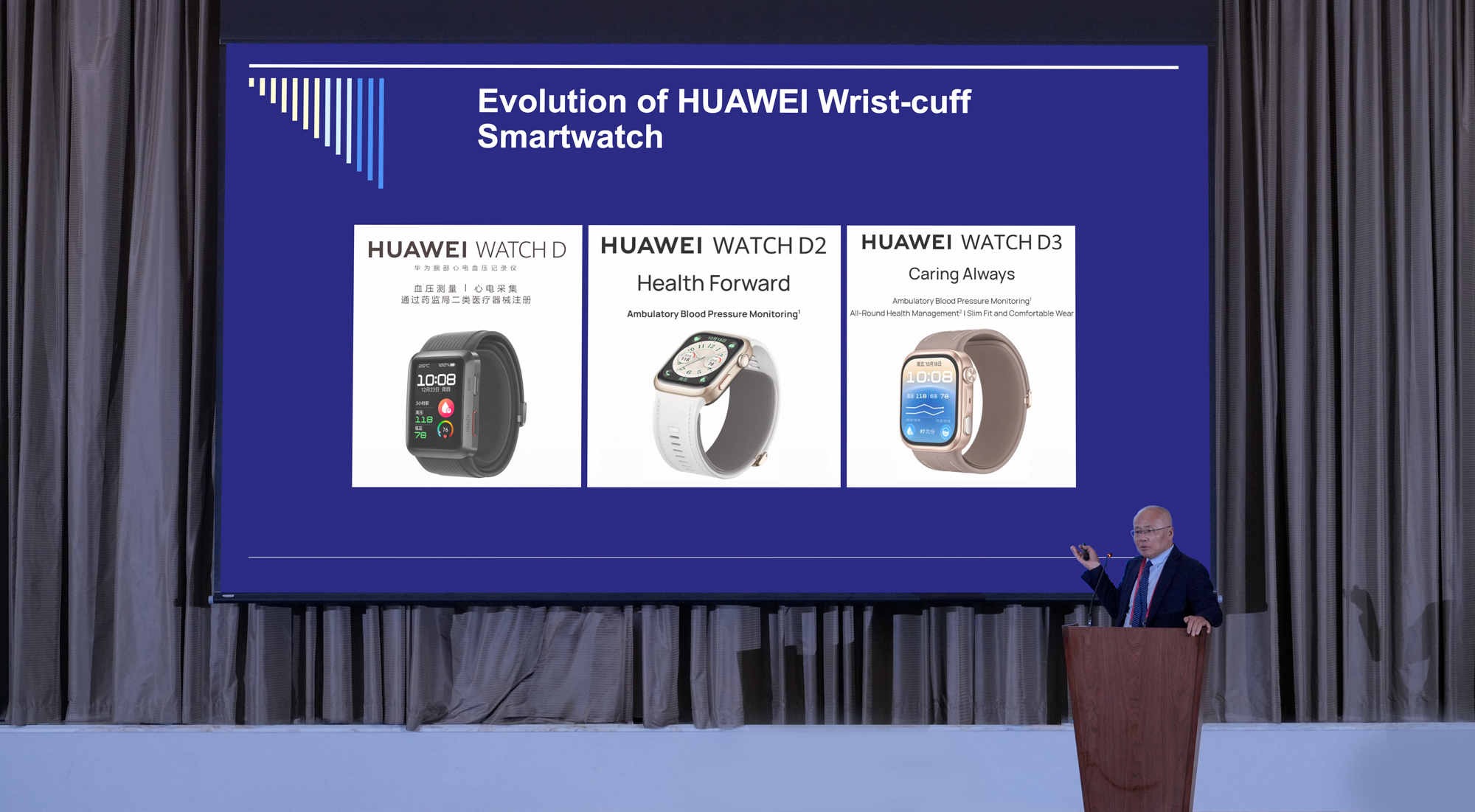
The HUAWEI WATCH D3 was among the key products showcased during the conference, reflecting the growing role of wearable devices in health monitoring and preventive care.
ISH-ECS 2026, held in Dubai from 22 to 25 October 2026, brought together international organisations and specialists to discuss research and developments in hypertension prevention and management. Huawei, a member of the International Society of Hypertension (ISH), presented its latest wearable technology as part of the wider discussions around blood pressure monitoring.
Researchers also shared findings from studies involving Huawei WATCH D Series blood pressure monitors, exploring the potential of wearable technology to make monitoring more accessible and integrate it into everyday routines.
Professor Jiguang Wang, Professor of Cardiovascular Medicine at the Shanghai Institute of Hypertension, highlighted the potential for wearable devices to simplify blood pressure management.
“Innovations like Minimally Disruptive ABPM and environmental monitoring reminder by Huawei Watch D3 may be inspiring for shaping a new direction on how future blood pressure management is automated and seamlessly embedded into daily life, via wearable devices,” he said.
The comments reflect growing interest in technologies that could reduce the disruption associated with traditional monitoring methods while helping users and healthcare professionals better understand blood pressure patterns.
Professor George Stergiou, President of the International Society of Hypertension, described the HUAWEI WATCH D3 as a novel and reliable wearable device that provides insights into blood pressure profiles and patterns.
He also noted that the European Society of Hypertension (ESH) and the ISH encourage the clinical use of validated wrist-cuff blood pressure monitors, while emphasising the need for further research into their application in clinical practice.
Huawei Explores Wearable Technology for Diabetes Risk Research
Beyond hypertension, the conference examined how wearable technology and real-world health data could contribute to research into coronary heart disease and diabetes risk.
Professor Datin Yook-Chin Chia, Professor and Senior Consultant at Sunway University in Malaysia, discussed how reducing disruption and the number of measurements required could make comprehensive ambulatory blood pressure monitoring (ABPM) more practical for patients.
The potential use of wearable devices in earlier diabetes risk assessment was another key topic.
Professor Maryam Al Saeed of Mohammed Bin Rashid University of Medicine and Health Sciences highlighted a clinical research initiative involving Dubai Health and Huawei.
“Dubai Health and Huawei are collaborating on a clinical research initiative to evaluate non-invasive wearable technology for earlier diabetes risk, leveraging real-world health data to advance personalised prevention, enable proactive healthcare, and improve long-term health outcomes across diverse populations,” she said.
The initiative reflects increasing interest in using digital health technologies and real-world data to support personalised prevention strategies. Further clinical research will be important in determining how such technologies can be applied in healthcare settings.
Attendees at the Dubai event also had the opportunity to experience the HUAWEI WATCH D3’s blood pressure monitoring features in different scenarios, providing a closer look at how wearable devices are designed to bring health tracking into daily life.
Huawei Invests in Research and Development
Huawei’s health technology developments form part of its wider investment in research and development. In 2025, the company invested US$28.62 billion in R&D, equivalent to 21.8% of its annual revenue.
The company has also established the Wearable Blood Pressure Technology Innovation Fund in collaboration with the International Society of Hypertension to support further research into blood pressure monitoring technology.
Through its global health research laboratories and collaborations with healthcare organisations, Huawei is exploring applications for wearable devices across cardiovascular monitoring and other areas of digital health.
The discussions in Dubai highlighted the importance of collaboration between technology developers and medical researchers as wearable health products become increasingly sophisticated.
Foldable Smartphones and Camera Technology Take Centre Stage
Alongside its healthcare innovations, Huawei presented developments across its smartphone portfolio, including foldable smartphone designs and mobile camera technology.
The showcase highlighted the company’s continued focus on device engineering, imaging capabilities and new form factors as smartphone manufacturers compete to deliver more versatile mobile experiences.
Foldable devices have become an important area of smartphone development, combining larger displays with portable designs. Camera technology remains another key focus, with manufacturers working to improve image quality and expand the creative possibilities available to users through mobile devices.
Huawei’s presentation brought these consumer technology developments into the same discussion as its work in wearable health monitoring, demonstrating the breadth of innovation featured at the conference.
Huawei Discusses Tau Law and the Future of Chip Design
Semiconductor innovation was another subject addressed at the event, with Edwin You, Chief Technology Officer at Huawei, discussing the company’s Tau Law technology and its potential implications for microprocessor design and manufacturing.
The approach explores a different direction for semiconductor development, shifting attention beyond the traditional focus on reducing transistor dimensions towards minimising signal propagation delays.
Through technologies such as LogicFolding, Tau Law aims to improve transistor density and system performance. The underlying concept is to address the relationship between chip architecture, signal transmission and processing efficiency as the semiconductor industry continues to pursue higher performance.
The discussion highlighted the broader challenges facing chip designers as conventional approaches to scaling encounter increasing technical and manufacturing complexity.
Dubai Conference Highlights the Convergence of Health and Technology
Huawei’s MEA Tech Innovation Talks brought together developments in wearable health monitoring, smartphone engineering and semiconductor technology, illustrating the expanding scope of the company’s research and product innovation.
The HUAWEI WATCH D3 and the discussions surrounding cardiovascular health were central to the healthcare segment, while the smartphone showcase and Tau Law presentation explored developments further along the consumer technology and semiconductor value chains.
As wearable devices become more closely integrated with health research and digital services, collaboration between technology companies, researchers and healthcare institutions is likely to remain an important part of the sector’s development.
The Dubai conference offered a closer look at these evolving technologies, with blood pressure monitoring, personalised healthcare research, smartphone innovation and chip design emerging as key areas of focus.