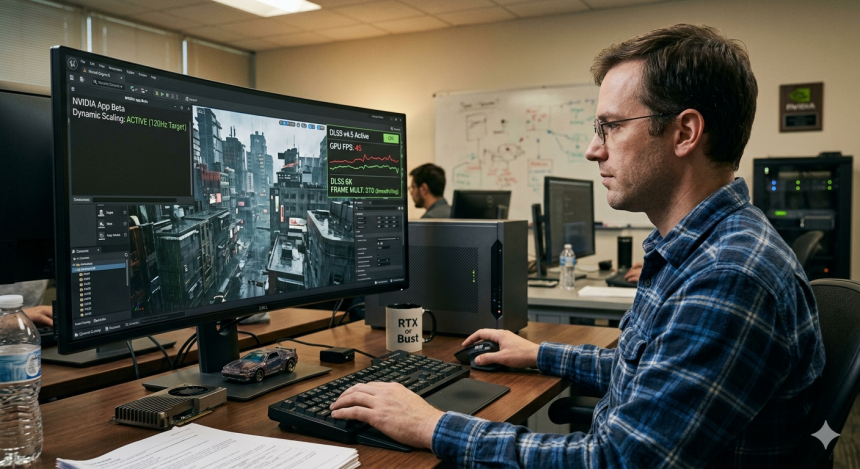
NVIDIA Corporation rolled out significant enhancements to its gaming technology stack, with the focus squarely on improving performance and frame fluidity for PC gamers using GeForce RTX GPUs.
The most noteworthy update is the release of DLSS 4.5 Dynamic Multi‑Frame Generation and enhanced Multi‑Frame Generation 6X modes through the latest beta of the NVIDIA App. These features build on NVIDIA’s Deep Learning Super Sampling (DLSS) technology already known for boosting frame rates using AI and take it several steps further by introducing a dynamic system that adjusts generated frames in real time based on the game’s workload and the target refresh rate. Gamers with high‑refresh rate displays, including 144 Hz and 240 Hz monitors, stand to benefit most from smoother, more consistent frame pacing without major performance costs.
Under the new update, DLSS 4.5 supports up to 6X Multi‑Frame Generation on GeForce RTX 50‑series GPUs, meaning users can now see up to five extra AI‑generated frames for every frame rendered by the GPU. This is a notable jump from prior DLSS frame generation limits and aims to deliver substantial performance gains especially at 4K resolution without sacrificing visual clarity.
The Dynamic Multi‑Frame Generation feature is designed to intelligently change how many AI frames are produced on the fly to hit your desired framerate goal while maintaining responsiveness and image quality. Early hands‑on testing suggests that this adaptive approach not only improves framerate numbers but also reduces stuttering and input latency in supported titles.
Alongside these advances, the NVIDIA App beta also introduces a background Auto Shader Compilation feature. This optional capability proactively compiles shaders after driver updates or during idle times, which can reduce in‑game loading stutters and provide smoother gameplay, especially in newer titles that previously triggered frequent runtime shader builds.
DLSS 4.5’s rollout in March has been supported by integrations in several titles and expanded native support across more game engines, a trend highlighted during this year’s Game Developers Conference. Developers are increasingly adopting the new DLSS modes and adaptive frame generation to ensure players experience both high performance and enhanced visual fidelity regardless of hardware baseline.
For gamers, the Latest updates mark a meaningful evolution in AI‑driven graphics technology. Rather than only focusing on raw GPU power, NVIDIA’s latest features emphasize dynamic performance scaling and intelligent frame management, which together aim to make high‑refresh gaming smoother and more accessible across different system configurations.