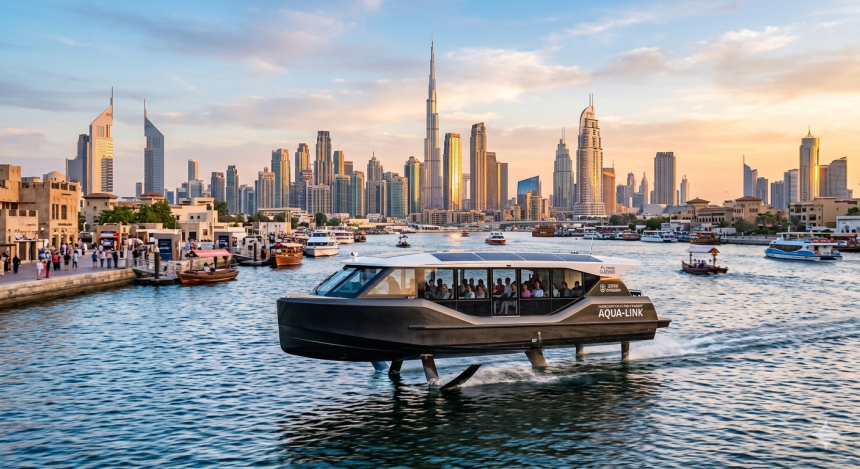
Urban mobility is on the brink of a major shift, and the next breakthrough may not be on roads or rails but on water. A new generation of “flying” electric boats, powered by hydrofoil technology, is emerging as a cleaner, faster, and more efficient way to move through congested cities. As governments and innovators search for sustainable transport solutions, these futuristic vessels are gaining serious attention for their potential to transform how people commute in urban environments.
At the core of this innovation are hydro foils underwater wings that lift the boat above the surface as it accelerates. Once elevated, the vessel glides over the water, dramatically reducing drag. This not only creates the striking effect of a boat that appears to “fly,” but also significantly improves energy efficiency. When combined with electric propulsion, the result is a near-silent, zero-emission mode of transport that aligns perfectly with the sustainability goals of modern cities.
The appeal of flying electric boats lies in their ability to solve multiple urban challenges at once. Traffic congestion continues to worsen in major cities around the world, placing immense pressure on existing infrastructure. Meanwhile, waterways rivers, canals, and coastlines remain largely underutilized. By shifting part of the transport network onto water, cities can unlock a new layer of mobility without the need for massive land-based construction. Hydrofoil boats also offer faster and smoother journeys, as they can travel at higher speeds with minimal resistance and reduced wave impact, making commutes not only quicker but more comfortable.
Technological advancements are driving this sector forward at an impressive pace.
Modern electric hydrofoils rely on lightweight carbon fiber structures, high-capacity battery systems, and intelligent navigation software that enhances stability and safety. Some models are already capable of reaching speeds exceeding 30 knots while maintaining remarkable efficiency. These innovations are making it increasingly feasible for hydrofoil boats to operate as part of public transport networks, water taxis, or even premium commuter services.
Several cities and companies have already begun testing and deploying these vessels in real-world conditions. Urban centers with established waterways are leading adoption, exploring how electric hydrofoils can complement existing transport systems. In forward-thinking regions such as the UAE, where sustainability and smart mobility are key priorities, flying electric boats could play a crucial role in redefining waterfront transport. With cities like Dubai continuously investing in innovation, integrating hydrofoil technology into marine transit could further enhance connectivity while supporting environmental targets.
Despite the promise, challenges remain. The cost of developing and manufacturing these advanced boats is still relatively high, which may limit large-scale adoption in the short term. Infrastructure is another key consideration, as cities will need to invest in charging stations, docking facilities, and maintenance systems. Additionally, regulatory frameworks must evolve to accommodate this new category of transport, ensuring safety standards and operational guidelines are clearly defined. However, as with most emerging technologies, these barriers are expected to decrease over time as adoption grows and economies of scale come into play.
Looking ahead, the future of urban mobility is likely to be more diverse, integrated, and sustainable than ever before. Flying electric boats represent a compelling vision of what that future could look like one where cities fully utilize their natural waterways, reduce reliance on fossil fuels, and offer faster, more enjoyable commuting experiences. Far from being just a futuristic concept, these vessels are rapidly becoming a practical solution with the potential to reshape transportation networks around the world.